Michigan Nonresident Licence Options
Navigating the labyrinth of hunting licenses in a new state can be incredibly confusing, especially when you’re an out-of-stater just trying to figure out what you need to hit the woods. Michigan, with its diverse hunting opportunities and specific regulations, is no different. This guide is designed to cut through the jargon and clearly lay out all the Michigan nonresident license options, helping you understand precisely what permits and tags you'll need to pursue your chosen game here in the Great Lake State.
Deciphering the Base License: Your Entry Ticket to Michigan Hunting
For many nonresident hunters, the first hurdle is simply understanding the foundational requirements. Michigan's system starts with a "Base License" which then allows you to purchase specific game tags. It's not always intuitive, especially if you're used to an all-in-one license from your home state. Getting this initial step right is crucial, otherwise, all other tags you purchase won't be valid.
The Fundamental Resident vs. Nonresident Distinction
First things first, Michigan draws a clear line between residents and nonresidents, and it significantly impacts the cost and sometimes even the availability of licenses. You are considered a Michigan resident if you've continuously resided in the state for at least six consecutive months immediately preceding your application for a license, or if you meet specific military or student criteria. If you don't fit these definitions, you're a nonresident, plain and simple. This distinction isn't just a formality; it determines which fee structure you'll pay, and often, nonresident fees are considerably higher. It's the cost of enjoying Michigan's fantastic hunting opportunities without contributing to the state's tax base year-round. Don't try to bend the rules here; the DNR is serious about residency requirements, and getting caught misrepresenting your status can lead to hefty fines and loss of privileges. Always ensure your primary residence details are accurate when purchasing licenses.
What the Base License Covers and What It Doesn't
The Base License is exactly what it sounds like – the foundation. For nonresidents, purchasing the appropriate Michigan Nonresident Base Licence Cost is the very first step before you can even think about buying a deer tag, a turkey license, or a small game license. It essentially grants you the privilege to hunt in Michigan, much like a driver's license grants you the privilege to drive. However, it doesn't give you the right to hunt any specific animal. Think of it as your admission ticket to the hunting arena. It covers certain minimal activities like hunting some furbearers (like coyote or fox), but for regulated game species such as deer, bear, elk, turkey, or even pheasants, you'll need additional species-specific licenses or tags on top of your Base License. This two-tiered system ensures that hunters pay for the specific resources they consume and the management efforts associated with those particular game populations.
It’s worth noting that if you're planning a full season of hunting, a Base License is non-negotiable. If you're a serious hunter who uses planning tools, services like GoHunt offer comprehensive state-by-state breakdowns of license requirements, application dates, and draw odds, which can be a lifesaver for nonresidents trying to navigate these rules across multiple states, including Michigan. This information helps you plan not just your hunt, but your budget for licenses as well.
Navigating Deer Hunting Opportunities for Nonresidents
Deer hunting is arguably the most popular pursuit in Michigan, and for good reason – we have a robust whitetail population, especially in the Lower Peninsula. Nonresidents looking to chase Michigan bucks and does have several license options, each with its own set of rules and implications regarding bag limits and hunting seasons. Understanding these is key to maximizing your hunt.
Understanding the Michigan Deer and Deer Combo Licenses
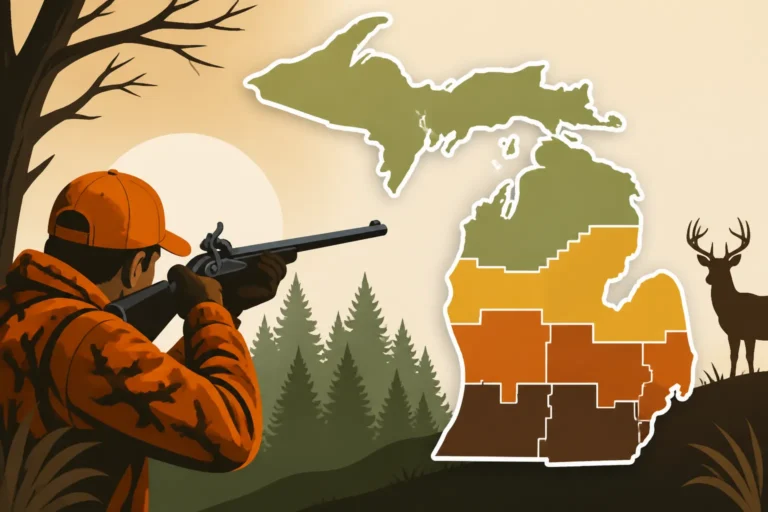
When it comes to deer, nonresidents have a couple of primary options: the single Michigan Deer Licence or the Michigan Deer Combo Licence. The single deer license generally allows you to take one antlered deer, provided it meets the antler point restrictions (APRs) for the specific Deer Management Unit (DMU) you're hunting in. The Deer Combo License, on the other hand, is usually the more popular choice for those looking to spend significant time in the field. It typically includes two deer tags: one for an antlered deer (again, subject to APRs) and one for an antlered or antlerless deer, depending on the specific tag and regulations. This second tag often offers more flexibility, allowing you to fill your freezer with a doe if you don't find a legal buck, or if you're hunting in an area with liberal antlerless opportunities.
It's crucial to consult the Michigan Deer Seasons and Tags document for the most current rules, as these can change annually. The regulations regarding what constitutes a legal antlered deer (e.g., at least one antler three inches or longer, or specific point requirements) are strictly enforced. For nonresidents, especially those unfamiliar with Michigan's terrain and local deer movements, having the flexibility of a combo license can be a real advantage, allowing for a longer hunting experience and potentially more venison to take home. Remember, these licenses are in addition to your nonresident Base License.
Accessing Antlerless Deer Tags and Management Units
Beyond the general deer licenses, nonresidents can also purchase Michigan Antlerless Deer Licences. These are typically available for specific DMUs and are often designed to help manage local deer populations. The availability of antlerless tags can vary greatly by DMU and by year, influenced by factors like deer herd health, agricultural damage, and winter severity. In some areas, antlerless tags are relatively easy to acquire over the counter, while in others, particularly in parts of the Upper Peninsula or highly managed areas, they might be more limited or only available through a drawing.
There's also a distinction between public and private land antlerless tags in some instances. Historically, some areas allowed hunters to purchase "private land only" antlerless tags, which are generally more abundant to help landowners mitigate deer damage. Always verify the specific DMU boundaries and whether an antlerless tag is valid on public or private land before you hunt. Utilizing mapping tools like the Mi-HUNT map can help you understand these boundaries and plan your hunt. For nonresidents, these tags present an excellent opportunity to fill the freezer and contribute to wildlife management goals, especially if you're hunting areas with high deer densities or have secured permission on private farmland in the southern part of the state.
Specific Hunt Periods Like the Liberty and Independence Hunts
Michigan offers a couple of special hunt periods that can be particularly appealing, especially for families or those seeking unique opportunities: the Liberty Hunt and the Independence Hunt. The Liberty Hunt is a youth and veteran-specific firearm hunt weekend that typically takes place in September. It allows eligible youth (16 years or younger) and hunters with a disability (as defined by the DNR) to hunt deer, often with more liberal antlerless opportunities. The Independence Hunt is similar but open to hunters with disabilities, providing dedicated time in the field with less pressure.
While these hunts are largely geared towards residents and those with disabilities, nonresidents meeting the eligibility criteria can participate, provided they possess the correct Michigan Hunting Licences and relevant deer tags. These hunts are fantastic opportunities for youth hunters to get an early start or for disabled hunters to enjoy a more accessible experience. If you fall into one of these categories as a nonresident, definitely look into the specific dates and requirements for participating in the Hunting the Michigan Liberty Hunt Weekend or the Independence Hunt. It could be a unique and rewarding way to experience Michigan's deer hunting culture.
Beyond Deer: Licenses for Small Game, Furbearers, and Waterfowl
Michigan's hunting opportunities extend far beyond just deer. The state offers incredible hunting for a variety of small game, furbearers, and waterfowl, each requiring its own specific licensing on top of your nonresident Base License. For those who enjoy a diverse hunting experience, Michigan truly has a lot to offer.
General Small Game and Furbearer License Details
If you're coming to Michigan to chase cottontails, squirrels, pheasants, or even snowshoe hares, you'll need a Michigan Small Game License. This license typically covers a wide array of species, allowing for a diverse hunting trip. The Michigan Small Game and Furbearer Seasons page is your go-to resource for specific season dates, bag limits, and legal methods for each species. For example, squirrel hunting in Michigan hardwoods offers a completely different experience than chasing rabbits with beagles through thick brush. Your small game license makes both possible.
Furbearers like coyote and fox are actually covered by your Base License, which is a nice perk if you happen to encounter them while pursuing other game. However, if you're specifically targeting other furbearers for their pelts or for trapping, such as bobcats, raccoons, or muskrats, you might need additional permits or a specific fur harvester license. Always double-check the regulations, especially for species like bobcats, which often require permits obtained through a lottery system in designated areas, and for which nonresidents might have limited opportunities or specific unit restrictions. Services like GoHunt are excellent for keeping track of these nuances, as they often update their state profiles with the latest regulatory changes, helping hunters avoid any unintended violations.
Waterfowl Hunting: Licenses, Stamps, and Certifications
Waterfowl hunting in Michigan, particularly on the Great Lakes or in managed wetland areas, can be phenomenal. However, it comes with a few more requirements than small game. As a nonresident, you'll need your Base License, followed by a Michigan Waterfowl License. But that's not all! You'll also need to purchase a Federal Migratory Bird Hunting and Conservation Stamp (the "Federal Duck Stamp") and acquire your Harvest Information Program (HIP) certification.
The Federal Duck Stamp is an annual requirement for all migratory bird hunters aged 16 and older across the United States, and 98% of the proceeds go directly to conserving wetlands for wildlife. HIP certification is free but mandatory; it's a way for the U.S. Fish and Wildlife Service to collect data on migratory bird hunters to inform population management. You can get your HIP certification when you purchase your Michigan Waterfowl License. Knowing the Michigan Waterfowl Seasons and Zones is also critical, as season dates and bag limits can vary significantly between the Southern, Middle, and North Zones, impacting when and where you can hunt ducks and geese. Whether you're planning on Layout Hunting Michigan Big Water or field hunting geese in Southern Michigan, all these components must be in place before you step foot in a blind.
Special Draws and Application Processes for Nonresident Big Game
While deer and small game licenses are generally available over-the-counter, Michigan has several highly sought-after big game species that operate on a limited quota and lottery system. For nonresidents, these opportunities can be tougher to draw but offer truly once-in-a-lifetime hunting experiences. Planning well in advance and understanding the application process is absolutely critical.
The Michigan Turkey Application System
Wild turkeys have made a remarkable comeback in Michigan, offering fantastic spring and fall hunting opportunities. However, for specific hunt periods and locations, particularly in the spring, licenses are often allocated through a lottery drawing. Nonresidents are eligible to apply, but competition can be stiff. The application process typically involves purchasing an application for a specific hunt unit (like Unit M, NN, or ZZ) and hunt period. It's not uncommon for desirable units or early periods to have low draw odds, especially for nonresidents.
You'll need your Base License to even purchase an application. The Michigan Spring Turkey Applications and Units resource will provide the most current application deadlines, unit boundaries, and quota information. While some leftover licenses might be available over-the-counter after the drawing, these are often for less popular units or later hunt periods. If you're serious about a prime spring turkey hunt as a nonresident, applying through the lottery is your best bet. Even if you don't draw a limited quota license, Michigan also offers "unlimited" fall turkey licenses in some units, which are often available over-the-counter and present a great opportunity for nonresidents looking to try fall turkey hunting.
Entering the Michigan Bear License Drawing
Hunting black bear in Michigan is a challenging and incredibly rewarding experience. Michigan boasts a healthy bear population, especially in the Upper Peninsula and parts of the northern Lower Peninsula. However, bear licenses are strictly limited and allocated through a preference point drawing system. Nonresidents are eligible to apply, but it typically takes many years of accumulating preference points to draw a tag in the more desirable Bear Management Units (BMUs).
The Michigan Bear Licence Drawing process involves purchasing a bear application during a specific application period, usually in the spring. You gain one preference point for each year you apply and are unsuccessful, which increases your odds in subsequent years. Unlike some other states where nonresidents have extremely limited allocations, Michigan offers a fair chance to nonresidents, albeit after a long wait for points. When you finally draw, you'll also need to buy the actual bear license. The cost for a nonresident bear license is significantly higher than a resident one, so be prepared for that investment when your name finally comes up. It's a testament to the quality of Michigan's bear hunting that hunters are willing to wait so long and pay the premium.
Michigan Elk Hunt Application Considerations
Michigan's elk herd, primarily concentrated in the Pigeon River Country State Forest area, is a true success story, but it’s also one of the most exclusive hunting opportunities in the state. The Michigan's Limited Elk Hunt is incredibly competitive, even for residents. For nonresidents, the odds are astronomically low, as only a tiny percentage of the limited elk licenses are allocated to out-of-state hunters each year. This is truly a once-in-a-lifetime draw, as successful applicants are typically prohibited from applying again for a set number of years, or even permanently in some states.
Similar to bear, the elk hunt operates on a preference point system. You apply annually for the chance to draw an "any-elk" or "antlerless-only" license. Every year you apply and don't draw, you accumulate a point, improving your theoretical odds. However, given the extreme demand and limited nonresident allocation, drawing an elk tag as an out-of-stater is often considered a dream hunt that can take decades of consistent applications. If you're a nonresident hoping to hunt Michigan elk, you'll need immense patience and a commitment to applying every single year. Make sure you understand all the Michigan Elk Application Rules before investing your time and money into the process. Using a service like GoHunt can help you track your points and remind you of application deadlines, ensuring you never miss a chance to gain another point.
Streamlining Your License Purchase and Staying Legal
Once you've determined which Michigan nonresident license options you need, the next step is actually purchasing them. Thankfully, Michigan has made this process fairly accessible. However, it's not just about buying the right paper or digital tag; it's also about understanding the validity periods and ensuring you're compliant with all state hunting regulations, including hunter safety requirements.
Convenient Online and Retail Purchase Methods
Michigan has made it incredibly easy for both residents and nonresidents to purchase hunting licenses. The most convenient method for most out-of-state hunters is through the Michigan DNR's e-License system on their official website. This allows you to purchase your Base License, deer tags, small game licenses, and even apply for lottery hunts from the comfort of your home, well in advance of your trip. Once purchased, you can print your licenses directly or access them digitally through the official Michigan DNR Hunt Fish App.
Speaking of the app, The Michigan DNR Hunt Fish App is a fantastic tool for any hunter in Michigan. It allows you to store your licenses digitally on your smartphone, report harvests, check regulations, and even use an integrated map feature. For nonresidents, this means one less piece of paper to worry about losing in the woods. Alternatively, if you prefer a physical license or encounter issues online, you can always purchase licenses in person at authorized license retailers across the state, including many sporting goods stores, bait shops, and even some convenience stores. This option is particularly helpful if you realize you need an additional tag while you're already in Michigan.
Crucial Information on License Validity and Hunter Safety
It's absolutely vital to understand that Michigan hunting licenses operate on a specific license year, which typically runs from March 1st to February 28th/29th of the following year. This means that a license purchased in, say, August 2024, would be valid until the end of February 2025. Always double-check the dates when purchasing to ensure your license covers your intended hunting period. Don't assume a license bought in December is valid for the following November without verifying.
Furthermore, hunter safety is a non-negotiable aspect of hunting in Michigan. All hunters born on or after January 1, 1960, are required to complete a hunter safety course before they can purchase a Michigan hunting license. This requirement applies equally to nonresidents. If you've completed a hunter safety course in another state or province, Michigan generally recognizes it, but you'll need to be able to prove it. Carrying your hunter safety certificate or card with you in the field is always a good idea. For youth hunters, Michigan offers a Michigan Mentored Youth Licence Rules program, allowing youth under 10 years old to hunt without a hunter safety certificate, provided they are accompanied by a licensed adult mentor. Always ensure you understand and adhere to Michigan's Michigan Hunter Safety Requirement to maintain a safe and legal hunting experience.
Common Questions and Challenges for Nonresident Hunters
Hunting in a new state always comes with a unique set of questions and challenges, and Michigan is no exception. Beyond the direct licensing requirements, nonresidents often ponder the overall cost, the value of various licenses, and how to best plan their trips to maximize their chances of success while staying within the rules.
Cost Comparisons and Value
One of the most frequent questions from nonresidents revolves around the cost of Michigan hunting licenses compared to their home state or other popular hunting destinations. Generally, nonresident licenses are significantly more expensive than resident licenses, and this is true for Michigan. For instance, a nonresident Base License, a Deer Combo, and a Waterfowl License can quickly add up. You can easily check the Michigan Hunting Licences and What They Cost on the DNR website. While it might seem like a substantial investment, consider what you're getting in return: access to vast tracts of Public Hunting Land in Michigan, diverse game populations (from trophy whitetails in the Northern Lower Peninsula to grouse in the Michigan's Three National Forests), and a generally well-managed wildlife system.
The "value" of a Michigan nonresident license really depends on your hunting goals and expectations. If you're planning a multi-species hunt across several weeks, the value proposition is strong. If you're just popping in for a single day, the initial investment might feel high. Many experienced nonresident hunters factor these costs into their overall trip budget, viewing them as essential to their adventure. Services like GoHunt not only help with license information but often provide detailed cost breakdowns for different hunting scenarios, allowing you to budget effectively and see where your money goes.
Planning Ahead for Limited Opportunity Hunts
For species like bear and elk, and even some specific turkey hunts, successful nonresident hunting in Michigan isn't just about buying a license; it's about strategic long-term planning. The preference point system for bear and elk means that immediate gratification is rare. Nonresidents serious about these hunts need to commit to applying year after year, sometimes for a decade or more, to build up enough points for a reasonable chance at a draw. This means consistently paying the application fee and understanding that your hunting plans for these species are on a multi-year horizon.
Beyond the draw, thorough scouting and understanding Michigan's specific regulations, like Michigan CWD Rules and Test Sites or carcass transport restrictions, become paramount. Planning accommodation, understanding vehicle access on Michigan State Forest Hunting, and even preparing for potential weather extremes (a Michigan November can be quite cold and wet!) are all part of the nonresident hunter's challenge. Successful nonresident hunting in Michigan isn't just about showing up with a valid license; it's about preparation, patience, and a deep respect for the state's wildlife and regulations. It’s an investment in an experience, and with good planning, that investment can pay off in spades.
Disclaimer
The information provided in this guide is for general informational purposes only and is subject to change. Hunting regulations, license requirements, and fees are set by the Michigan Department of Natural Resources (DNR) and can be updated annually or more frequently. Always consult the official Michigan DNR website or their current hunting digest for the most accurate and up-to-date regulations before planning any hunting activity.