How Turkeys Were Restored to Michigan
It's hard to imagine Michigan's woods without the booming gobble of a wild turkey echoing through the spring air, or the sight of a hen leading her brood through a field edge in summer. But for a significant stretch of our history, that's exactly what our forests were like – silent and empty of these magnificent birds. Many of us grew up hearing stories from our grandparents about a time when wild turkeys were practically non-existent in our state, a stark contrast to the vibrant populations we enjoy today. This guide isn't just a history lesson; it's a deep dive into the incredible, often challenging, journey that brought wild turkeys back to Michigan, a true testament to dedicated conservation and the power of hunters.
The Vanishing Act: Where Did Michigan's Turkeys Go?
Before European settlement, Michigan was teeming with wild turkeys. These majestic birds were an integral part of the ecosystem, foraging through vast hardwood forests, particularly in the southern Lower Peninsula. They provided a critical food source for Native American tribes and early settlers alike, their keen eyesight and wary nature making them a challenging, but rewarding, quarry. The deep, unbroken expanses of timber provided perfect roosting sites and abundant mast crops like acorns and beechnuts, fueling thriving turkey populations for centuries.
However, as European settlers pushed further into the Michigan wilderness, bringing with them a rapidly expanding population and industrial practices, the wild turkey faced an existential threat. The seemingly endless forests that once sheltered these birds began to shrink dramatically. As logging operations cleared vast tracts of prime habitat and land was converted to agriculture, the turkeys lost their crucial cover and food sources, fragmenting their populations and making them more vulnerable. It was a rapid and devastating change that fundamentally altered the landscape these birds relied upon.
The combination of unchecked market hunting and widespread habitat destruction proved to be a death knell for Michigan's wild turkeys. With no established hunting seasons or bag limits, turkeys were harvested year-round, often for commercial sale to burgeoning cities. Hunters simply didn't know any better at the time, operating under the misguided belief that wildlife populations were inexhaustible. By the early 1900s, the once-plentiful wild turkey was completely extirpated from Michigan. The last known wild turkey in the state was believed to have been killed in the vicinity of Allegan County in 1907, leaving a profound void in our natural heritage.
The Dawn of Restoration: Early Attempts and Lessons Learned
The realization that wild turkeys were gone, and the silent woods that followed, spurred conservationists and hunters to action. Starting in the 1930s, the state initiated its first attempts at reintroduction. These early efforts, while well-intentioned, were often based on incomplete scientific understanding of what wild turkeys truly needed to survive and thrive. It was a frustrating period, as the hope for their return was palpable, but consistent success remained elusive.
A common approach in these initial efforts was the release of game farm-raised turkeys. The thinking was logical: if wild turkeys were gone, why not raise them in captivity and release them into suitable habitat? Pen-raised turkeys seemed like an easy solution. They were readily available, and it felt like a direct way to replenish the empty woods. Unfortunately, this strategy was largely a failure, leading to significant disappointment and wasted resources for those who championed the cause.
The fundamental flaw with pen-raised birds quickly became apparent. These turkeys lacked the innate wild instincts crucial for survival in Michigan's challenging environment. They hadn't learned to evade predators, find natural food sources efficiently, or adapt to harsh weather conditions. Many were susceptible to domestic diseases, and their genetic makeup, bred for captivity, often differed from true wild strains. They simply weren't equipped to survive, and most perished shortly after release, leaving conservationists scratching their heads and hunters feeling deflated.
Realizing What Didn't Work
The repeated failures of the pen-raised turkey releases were disheartening. Time and money were poured into these efforts, only to see the released birds disappear or succumb to the elements. Imagine the frustration of those dedicated individuals who genuinely wanted to see turkeys return, only to be met with constant setbacks. It was a stark lesson in the complexities of wildlife reintroduction and the unique biology of wild species.
This period of trial and error, however, was crucial. It forced wildlife managers to confront the reality that simply putting birds on the ground wasn't enough. They began to understand that the key to successful reintroduction lay in securing truly wild stock – birds that had already honed their survival skills in natural environments. This was a pivotal shift in thinking, moving away from a "quantity over quality" approach to one rooted in biological realism and ecological understanding.
The hard-won lessons from Michigan's early attempts, and similar experiences in other states, underscored the importance of sourcing wild-trapped birds. The challenge then became, how do you catch enough truly wild turkeys without harming them, and where do you find them when your own state's population is gone? This realization paved the way for more sophisticated and ultimately successful strategies that would transform Michigan's turkey landscape forever.
The Game Changer: Trap and Transfer Success
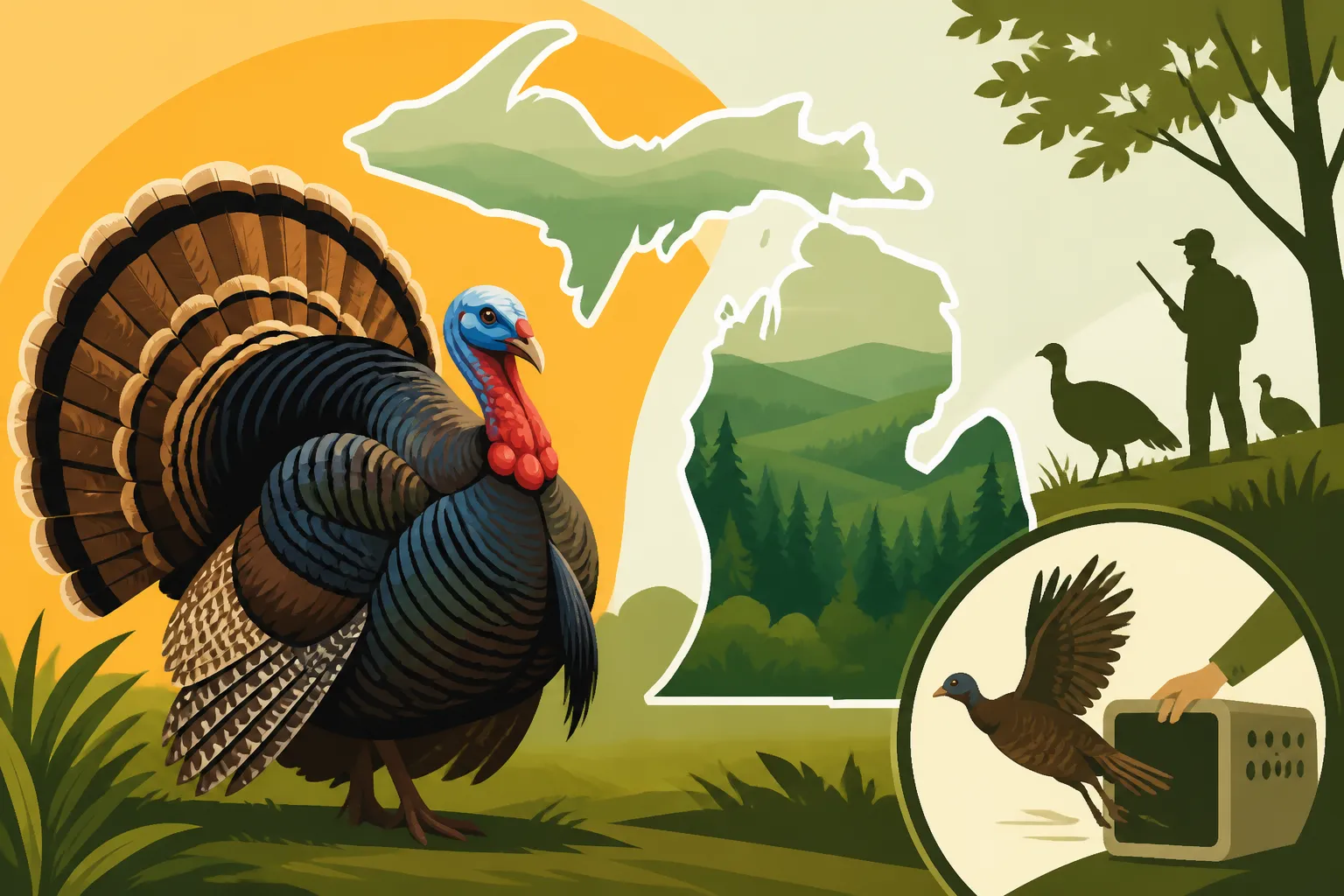
The real breakthrough in wild turkey restoration came with the refinement of the "trap and transfer" method. This innovative technique, primarily involving the use of rocket-propelled nets, allowed wildlife biologists to capture significant numbers of wild turkeys from healthy, established populations without harming them. The birds would be quickly processed, health-checked, and then transported to new release sites, often hundreds of miles away. It was a monumental logistical undertaking, but one that yielded incredible results.
The beauty of the trap and transfer method lay in its ability to introduce genetically robust, behaviorally sound wild turkeys into new areas. These weren't naive, pen-raised birds; they were savvy, wild-born turkeys equipped with all the instincts necessary to thrive. They knew how to forage, avoid predators, and find suitable roosting and nesting cover. This ensured a much higher survival rate and a far greater chance of establishing self-sustaining populations, solving the critical problem that plagued earlier efforts.
Michigan looked to successful programs in other states for a blueprint. Pennsylvania and Missouri, for example, had already demonstrated the effectiveness of trap and transfer, particularly when coupled with careful habitat selection. Their successes provided a roadmap, inspiring Michigan's wildlife managers with the confidence that a similar approach could finally bring wild turkeys back to our state. It was a moment of renewed hope, tempered with the cautious optimism of lessons learned.
Michigan's Groundbreaking Efforts
Building on these insights, Michigan embarked on its own ambitious trap and transfer program in the late 1950s and early 1960s. The initial wild turkeys for reintroduction were acquired from Pennsylvania and other states where populations were flourishing. These were precious birds, captured with great care and transported with even greater urgency, destined to be the founders of Michigan's new wild turkey population. It was a bold move, requiring significant resources and inter-state cooperation.
The release sites were chosen with meticulous care, focusing on areas with extensive hardwood and conifer forests, abundant mast crops, and minimal human disturbance – essentially, places that mirrored the ideal habitat of wild turkeys before their decline. Key areas in the northern Lower Peninsula, particularly around the Manistee National Forest and Allegan State Game Area, were targeted first. These were places where existing habitat, though altered, offered the best chance for the birds to take hold.
The initial growth was slow but steady, a testament to the resilience of these wild birds and the careful planning of the Department of Natural Resources (DNR). Biologists closely monitored the released populations, tracking their movements, reproductive success, and overall health. There were still challenges, of course – severe winters could take a toll, and localized issues sometimes arose – but the trend was clear: these wild-trapped turkeys were establishing themselves. For those who track wildlife populations today, especially through platforms like GoHunt, understanding these historical patterns can offer valuable context when scouting new areas or predicting population trends.
Strategic Release Sites and Habitat
The success of Michigan's wild turkey restoration was deeply intertwined with the strategic selection of release sites. Biologists understood that simply releasing birds wasn't enough; they had to be placed in habitats where they could immediately find food, shelter, and nesting opportunities. This meant prioritizing diverse landscapes featuring a mosaic of mature forests, open fields, and thick cover. Oaks were particularly important for acorn production, a critical winter food source, while conifers offered vital thermal cover during harsh Michigan winters.
Michigan's DNR meticulously mapped out potential release zones, considering factors like timber composition, agricultural interfaces, and existing predator populations. They knew that a healthy mix of hardwoods for food, softwoods for roosting, and brushy edges for nesting and brooding poults was essential. This thoughtful approach ensured that the founding populations had the best possible chance to disperse and establish themselves without immediately facing insurmountable ecological hurdles.
As populations grew in the northern Lower Peninsula, the trap and transfer efforts expanded into the Upper Peninsula. While the U.P. presented unique challenges with its harsher winters and different forest types, careful site selection again proved critical. Areas with suitable habitat, particularly those influenced by agricultural pockets or mixed forest types that provided diverse food sources and cover, were chosen. This systematic, science-driven approach allowed wild turkeys to gradually reclaim their historical range, transforming empty woods into bustling turkey territories.
Building a Wild Population: The Role of Hunters and Management
The incredible comeback of Michigan's wild turkey population wouldn't have been possible without the unwavering support and financial contributions of hunters. It's a truth that often gets overlooked: hunters are, and always have been, the primary funders of wildlife conservation in North America. Through the purchase of hunting licenses, stamps, and excise taxes on firearms and ammunition (thanks to the Pittman-Robertson Act), hunters provide billions of dollars annually for wildlife management, habitat restoration, and research. These funds were absolutely crucial for sustaining Michigan's costly and long-term trap and transfer program.
Beyond financial contributions, hunter-led conservation organizations played a monumental role. Groups like the National Wild Turkey Federation (NWTF) were, and continue to be, pivotal partners with state agencies. They provided volunteers, organized fundraising events, and actively participated in habitat improvement projects. Their dedication wasn't just about ensuring hunting opportunities; it was about a deep-seated desire to see a thriving wild turkey population for its own sake, for the health of the ecosystem, and for future generations to enjoy.
The advocacy and volunteer work of countless individual hunters also made a difference. They reported sightings, helped with surveys, and championed conservation efforts in their local communities. This grassroots support created a positive feedback loop: as turkey populations grew, more people became interested in hunting them, leading to more license sales and further funding for conservation. It’s a powerful example of how a passionate public can directly contribute to ecological recovery.
Modern Turkey Management and Surveys
Today, modern turkey management in Michigan relies on robust scientific data to ensure the continued health and sustainability of the population. The DNR constantly monitors Michigan Turkey Population Trends through various surveys, including brood counts, hunter harvest reports, and landowner observations. This comprehensive data allows biologists to assess population health, identify potential issues, and make informed decisions about hunting seasons and quotas. It’s an ongoing, dynamic process to keep our turkey numbers strong.
One of the most critical metrics used in turkey management is Poult-to-Hen Ratios and What They Mean. This ratio, which compares the number of young turkeys (poults) to adult hens, is a direct indicator of reproductive success. A low ratio can signal problems like poor nesting success, high poult mortality, or unfavorable weather during the spring hatch. Understanding these ratios helps managers pinpoint potential stressors on the population and adjust strategies accordingly, ensuring future generations of gobblers.
Setting appropriate seasons and quotas is another cornerstone of sound turkey management. Biologists consider not just population trends and poult-to-hen ratios, but also factors like habitat conditions, hunter effort, and even specific challenges such as Nest Predation and Turkey Hatches. For instance, if predation is high in a particular region, managers might need to consider strategies to improve nesting cover. Hunters planning their spring hunts often use tools like GoHunt to check drawing odds, unit boundaries, and application deadlines, integrating directly into the management framework.
Challenges and Continued Conservation
While Michigan's wild turkey restoration is a resounding success, the work of conservation is never truly finished. Modern populations face ongoing challenges, including habitat fragmentation due to development, the spread of diseases like Avian Influenza, and the ever-present threat of poaching. Maintaining robust and healthy populations requires constant vigilance and proactive management strategies. It’s a delicate balance that calls for sustained effort from the DNR, hunters, and landowners alike.
Balancing hunting pressure with population health is a continuous task. The DNR must ensure that harvest levels, such as those reflected in Michigan Spring Turkey Harvest Numbers, are sustainable and don't negatively impact the turkey population's ability to reproduce and expand. This often involves adjusting bag limits, season lengths, or even introducing special restrictions in certain areas. It's about providing ample hunting opportunities while safeguarding the resource for the long haul.
Ongoing habitat improvement projects are also vital for the long-term success of Michigan's turkeys. This includes promoting diverse forest management practices, creating and maintaining early successional habitat, and working with private landowners to enhance turkey-friendly landscapes. Understanding the factors that contribute to healthy turkey populations and for those who want to dive deeper into the science or locate the Best Michigan Counties for Turkeys, platforms like GoHunt are fantastic for mapping and data.
The Wild Turkey's Return: A Modern Michigan Success Story
Today, wild turkeys are thriving in Michigan, a testament to decades of dedicated conservation. The population has expanded dramatically from those initial trap and transfer releases, establishing strongholds across much of the Lower Peninsula and increasingly in the Upper Peninsula. It’s a remarkable turnaround from the early 1900s when they were completely absent. The success story is now celebrated annually as hunters take to the woods in pursuit of spring gobblers.
The current distribution showcases the incredible adaptability of these birds. Areas like Where Michigan Turkeys Are Densest, often characterized by a mix of mature timber and agricultural lands, consistently produce high numbers of birds. Even in the more rugged terrain of the Turkeys in the Upper Peninsula, populations have established themselves, demonstrating their resilience to harsher conditions. This widespread presence means that opportunities abound for hunters across the state.
For many hunters, the return of the wild turkey has opened up entirely new traditions. From meticulously scouting prime habitat to applying for a tag through systems like those outlined in Michigan Spring Turkey Application Deadlines, the turkey hunt has become a cherished annual event. Learning to mimic their intricate calls, such as mastering Calling a Michigan Gobbler Off the Roost, adds another layer of challenge and reward to the pursuit. It's a vibrant hunting culture born directly from conservation success.
The Joy of Spring Gobblers
There's truly nothing quite like a Michigan spring turkey hunt. The crisp morning air, the chorus of songbirds, and then, the heart-stopping moment when a gobbler sounds off from his roost, his voice echoing through the awakening woods. It's a sensory experience that connects hunters directly to the wildness of our state, a testament to the wilderness that was nearly lost. The challenge of coaxing a wary gobbler into range, often requiring patience, stealth, and skillful calling, provides a unique and unforgettable thrill.
The satisfaction derived from harvesting a wild turkey, knowing that your efforts are part of a larger conservation success story, is profound. It's not just about the meat on the table or the tag punched; it's about being a participant in the ongoing restoration of a magnificent species. This profound connection reinforces the bond between hunters and conservation, highlighting the vital role they play in the health of our ecosystems.
Looking to the future, the goal remains to sustain these vibrant populations so that generations to come can experience the thrill of the spring gobble. This includes exploring diverse hunting methods, such as utilizing Run-and-Gun Turkey Tactics on State Land for mobile hunters, or even engaging in Hunting Michigan's Fall Turkey Season, which offers a different challenge altogether. Whether you're targeting big birds in the farmlands, as described in Turkey Tactics for Southern Michigan Farms, or pursuing them in the deep timber, the legacy of turkey restoration is one that continues to enrich Michigan's outdoor heritage.
Michigan Wild Turkey Restoration Timeline
| Era/Phase | Approximate Period | Key Status | Primary Challenges | Key Restoration Methods | Outcomes/Notes |
|---|---|---|---|---|---|
| Pre-Settlement | Before 1800s | Abundant, widespread | None | N/A | Integral part of Michigan ecosystem. |
| Rapid Decline | 1800s – Early 1900s | Rapid decrease, near extirpation | Unregulated market hunting, massive habitat loss | None | Last wild turkey taken in 1907. |
| Early Reintroduction Attempts | 1930s – 1950s | Critically scarce, localized failures | Releasing pen-raised birds that lacked wild instincts | Game farm releases | Largely unsuccessful, high mortality. |
| Trap & Transfer (Initial) | Late 1950s – 1970s | Gradual increase, spreading | Sourcing wild stock, securing suitable habitat | Wild trap-and-transfer from other states (e.g., PA) | Established first self-sustaining populations in N. Lower MI. |
| Population Expansion | 1980s – Present | Thriving statewide | Disease management, habitat fragmentation, balanced hunting pressure | Continued habitat work, science-based management | Robust, huntable populations across Michigan. |
Disclaimer
The information provided in this guide is for informational purposes only and is not intended as a substitute for official regulations. Always consult the Michigan Department of Natural Resources (DNR) website and current year's hunting regulations for the most accurate and up-to-date information on seasons, licensing, and rules before heading afield. Hunting regulations can change annually, and it is the hunter's responsibility to be fully informed.